
Why Protecting Your Rental Property Starts with a Smart Security Plan
Secure rental property investments require a multi-layered approach combining physical deterrents, smart technology, and proactive management. Here’s what landlords need to know:
Quick Action Checklist to Secure Your Rental Property:
- Physical Security – Install solid-core doors with deadbolt locks, secure all windows, and add motion-sensor lighting
- Access Control – Rekey locks between tenants, consider smart locks, and implement entry monitoring
- Surveillance – Install cameras in common areas (never inside units) while respecting tenant privacy
- Tenant Vetting – Conduct thorough background and credit checks before signing leases
- Insurance Protection – Obtain landlord insurance with liability and loss-of-rent coverage
- Regular Maintenance – Conduct inspections, maintain lighting, and address security concerns promptly
Having a safe, secure home isn’t just nice to have—it’s a basic human need. Yet over one million burglaries occur each year in the United States, and 62.8% of those happen in residential properties. For landlords, the stakes are even higher. A break-in doesn’t just mean property damage. It means lost rental income, potential lawsuits, higher insurance premiums, and tenants who feel unsafe.
The good news? Most security breaches are preventable with the right strategy.
Why security matters for rental properties:
- Tenant safety – Your legal and moral obligation to provide a habitable, safe environment
- Investment protection – Prevent costly damage, vacancy, and liability claims
- Financial stability – Avoid the $16K average loss from tenant evictions and property damage
- Tenant retention – Security-conscious tenants pay more and stay longer
- Insurance benefits – Better security can lower premiums and simplify claims
The reality is simple: 83% of burglars look for signs of an alarm system first, and more than half will give up if they see one. Security doesn’t have to be complicated or expensive. It just needs to be intentional.
I’m Heidi Duncan, owner of Duncan & Associates Insurance Brokers in Olympia, Washington. For years, I’ve worked with property investors and landlords to secure rental property investments through comprehensive insurance coverage and risk management strategies—because protecting your property should never feel overwhelming. Let me walk you through exactly what works.
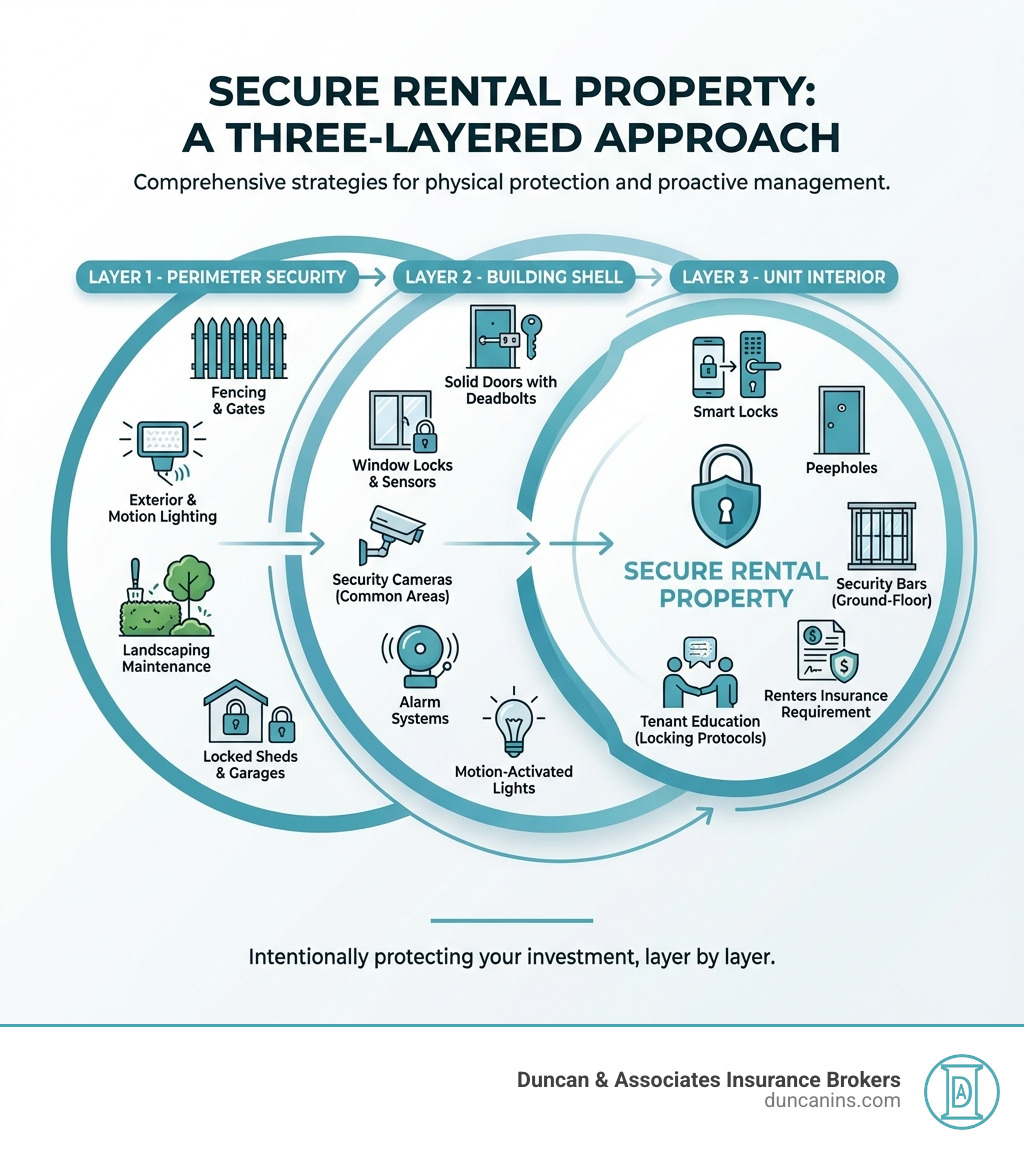
Key terms for secure rental property:
Why Rental Property Security is a Non-Negotiable Investment
When it comes to our rental properties, we often think about income and maintenance, but the security of our investment and our tenants is equally, if not more, important. A secure rental property isn’t just a selling point; it’s a foundational element of successful property ownership. By prioritizing security, we attract and retain quality tenants who value a safe living environment. This, in turn, helps maintain property value by limiting damage from potential criminal activity and reduces the likelihood of costly insurance claims.
Robust security measures provide us, as landlords, with invaluable peace of mind. We can proudly say we provide a safe, secure home—a basic human need—knowing we’ve taken proactive steps to protect both our investment and the people living in it.

The Legal and Financial Risks of Inaction
Neglecting rental property security can open a Pandora’s box of legal and financial headaches. As landlords, we have a legal obligation to provide a habitable and reasonably safe environment for our tenants. Failing to do so can lead to premises liability lawsuits and negligence claims if a tenant experiences a crime that could have been prevented by adequate security.
Consider the financial implications:
- The average homeowner losses related to tenant evictions can be a staggering $16,000.
- The average cost of legal, court filing, and bailiff fees for tenancy hearings is around $1,450.
- The eviction process itself can be lengthy, taking anywhere from 6 to 10 months, depending on local regulations. This means months of lost rental income on top of legal expenses.
Beyond direct legal costs, a reputation for an unsafe property can lead to high tenant turnover, increased vacancy rates, and difficulty attracting new renters. Each break-in or incident can cause property damage, leading to repair costs and, potentially, increased insurance premiums. While crime rates may be falling in some areas, there’s no such thing as a crime-free neighborhood, and the experience of property crime can be traumatizing for tenants and financially burdensome for us. The burden of theft and vandalism can significantly impact our rental business.
The Benefits of a Proactive Security Stance
On the flip side, a proactive approach to security brings a wealth of benefits. Investing in security measures is a must for landlords, leading to:
- Higher tenant satisfaction: Tenants feel safer and more valued, leading to a more harmonious living environment.
- Longer lease terms: Satisfied tenants are less likely to move, reducing our marketing and turnover costs.
- Lower vacancy rates: Security-conscious tenants actively seek out properties with good security, making our units more attractive.
- Potential for higher rent: A secure property can command a premium in the rental market.
- Reduced liability: Demonstrating a commitment to security can protect us from negligence claims and may even lower our insurance premiums.
- Increased profitability: Fewer incidents, lower turnover, and potentially higher rent all contribute to a healthier bottom line.
By making our properties safer, we not only protect our financial interests but also improve our reputation as responsible and caring landlords. We invite you to Learn more about Property Investor Insurance from Duncan & Associates to understand how comprehensive coverage can further fortify your investment strategy.
Fortifying Your Property: A Physical Security Checklist
A strong defense starts with a strong perimeter. Think of your rental property’s security like an onion, with layers protecting the core. We recommend a layered security approach, starting from the outside in. The first step is conducting a comprehensive security audit to identify weak points. 34% of burglars enter a home through the front door, making entry points a top priority.
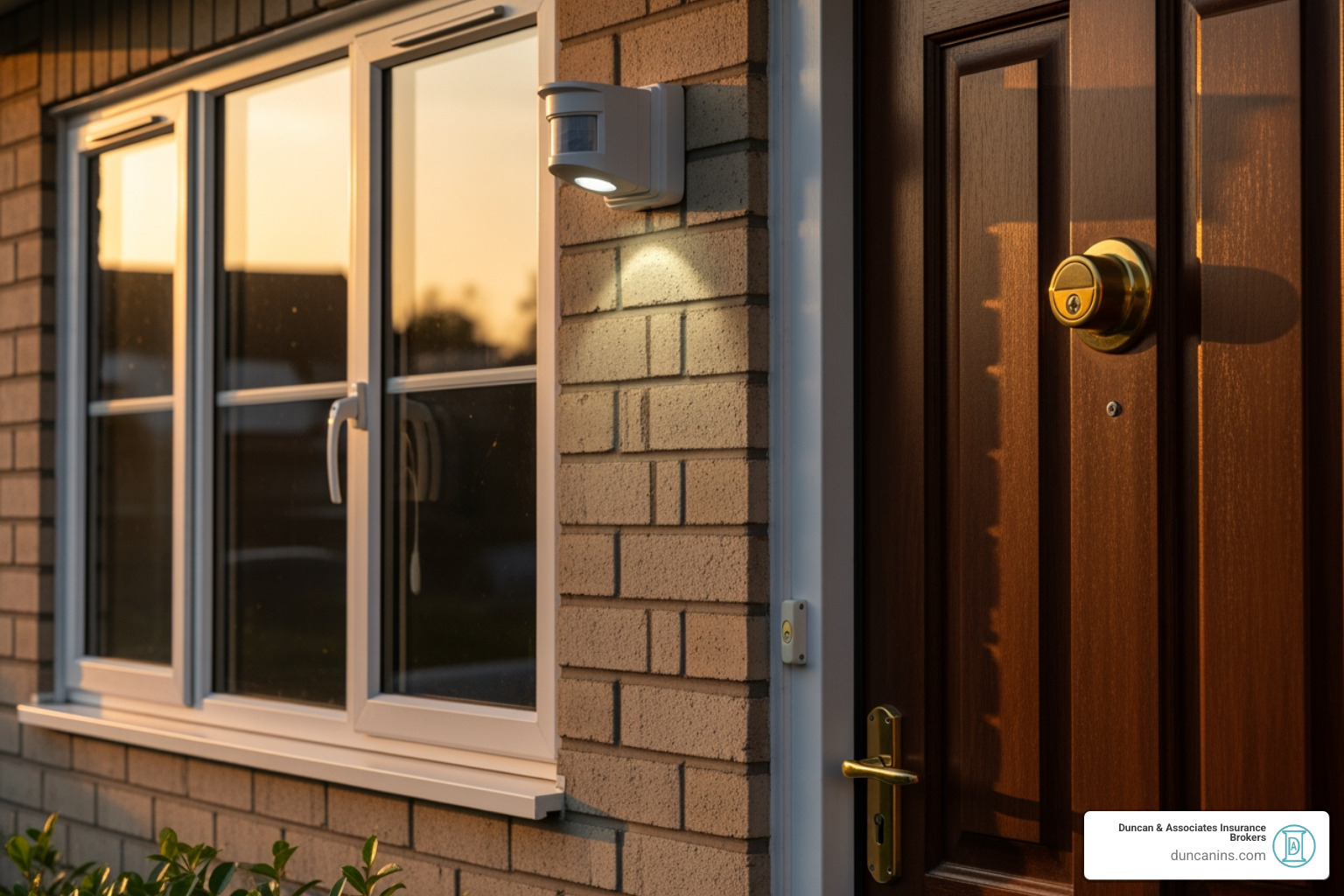
When performing an audit, we assess the front door, review all windows for functional locks, and test all alarms and cameras annually. It’s often most convenient to conduct these audits when a property is between tenants, but we can also do them with prior tenant notification if the unit is occupied. It’s always better to be safe than sorry!
Doors: Your First Line of Defense
Doors are often the most common entry point for intruders, so they demand our utmost attention.
- Solid-core doors: For all exterior entrances, solid-core doors (made of wood or metal-reinforced) are crucial. They are much sturdier than hollow-core doors and hold up better against forced entry methods like kicking or prying.
- High-quality deadbolt locks: These are non-negotiable. Deadbolt locks improve security by making it harder for intruders to pick or force their way in. We recommend deadbolts with at least a 1-inch throw and made of quality metal.
- Reinforced strike plates: A deadbolt is only as strong as its strike plate. We should reinforce door frames with heavy-duty, long-screw strike plates to prevent the door frame from splintering under pressure.
- Peepholes: A simple peephole allows tenants to identify visitors before opening the door, adding a vital layer of safety.
- Smart locks: These offer convenience and improved control. We can remotely grant or revoke access, eliminating the need to rekey locks physically. If we’re providing smart locks, we empower tenants to manage access for trusted individuals and ensure the property is always locked.
- Changing locks between tenants: This is a fundamental security measure. We should always rekey or change all exterior locks when a tenant moves out to prevent previous occupants or anyone who might have obtained a copy of the key from gaining unauthorized entry.
- Securing sliding glass doors: These are notoriously vulnerable. We should install a reliable locking mechanism and reinforce them with a sturdy bar or rod placed in the track to prevent them from being forced open. We can also consider window sensors as part of a security system.
Windows, Lighting, and Exteriors
Windows, lighting, and the exterior of our properties play a significant role in creating a secure rental property.
- Window locks and sensors: All windows should have functional locks. For added protection, especially on ground-floor units, we can consider security film or security bars. Security film makes glass more resistant to shattering, making forced entry more difficult. Window sensors can also be integrated into an alarm system.
- Landscaping maintenance: Unkempt landscaping can provide hiding spots for intruders. We should regularly trim shrubs and trees near windows and entrances to eliminate potential cover.
- Motion-activated exterior lighting: Good lighting is a powerful deterrent. We should install bright, motion-activated lights near all entrances, walkways, and parking areas. These lights not only deter criminals by exposing their presence but also help tenants and visitors steer safely.
- Well-lit pathways and parking areas: Ensuring adequate, consistent lighting throughout the property’s exterior, especially in parking lots and common pathways, is crucial. We should promptly replace any burnt-out bulbs.
- Fencing and gates: Fencing clearly defines property boundaries and can deter casual trespassers. We should ensure all gates are sturdy and have secure locks. Regularly inspecting and repairing fences and gates maintains their effectiveness.
- Securing garages and sheds: These outbuildings often contain valuable tools or serve as easy entry points. We must ensure garage and shed doors have robust locks, and any windows are secured. Using security bars or rods on garage doors and keeping valuable items out of sight are good practices.
- Locking mailboxes: Mail theft is a growing concern. Providing locking mailboxes and reminding tenants to pick up their mail promptly can prevent identity theft and other issues.
Common Areas and Advanced Systems
For multi-unit properties, common areas require special attention.
- Access control systems: Key fob entry systems, automated door controls, or even license plate recognition for parking areas can restrict access to authorized individuals, enhancing security for the entire property. These systems simplify key management and allow us to monitor entry and exit points.
- Intercoms: Installing intercom systems at the building’s front door allows tenants to screen visitors before granting access, preventing unauthorized individuals from entering the building.
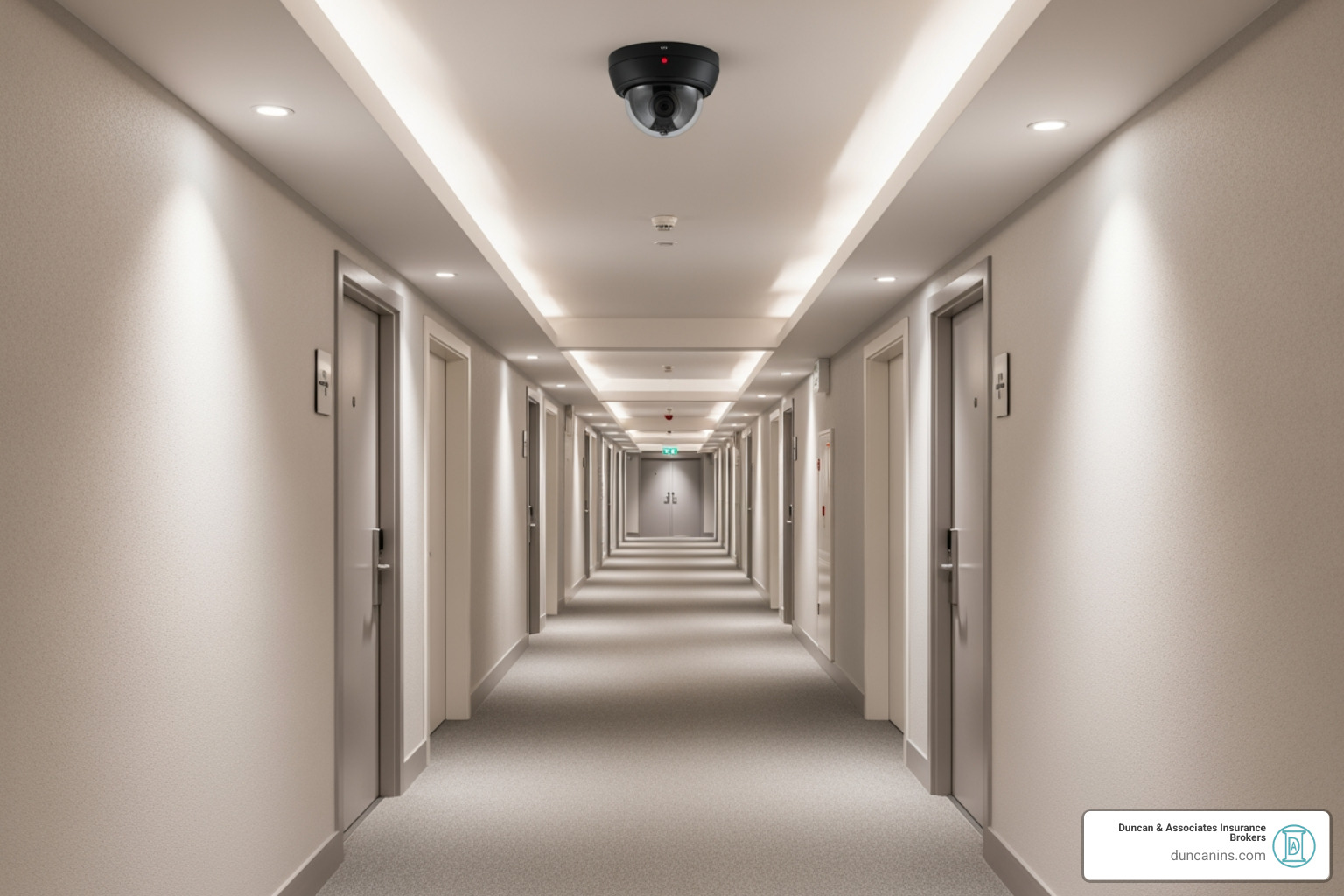
- Security camera laws and best practices: Security cameras are effective deterrents and provide valuable evidence. We can generally install cameras on the grounds and in public areas like hallways, lobbies, and parking lots. Visible cameras act as a deterrent, while hidden ones capture evidence. However, it’s critical to respect tenant privacy. Cameras may not be installed inside units, bathrooms, or anywhere a resident has a reasonable expectation of privacy, including pointing a camera at a bedroom window from outside. We must always comply with local laws and inform tenants about camera placement.
- Alarm systems: The presence of an alarm system is a significant deterrent; 83% of burglars look for signs of an alarm first, and more than half said they would give up if they saw signs. We can install alarm systems with door and window sensors, glass break sensors, flood detectors, and panic buttons.
- Professional monitoring benefits: Connecting our alarm systems and cameras to a professional monitoring service adds another layer of protection. These services can quickly assess emergencies and dispatch authorities, potentially reducing false alarms and ensuring a faster response. Professional monitoring can be surprisingly affordable, with averages around $30-$60 a month, and some insurance companies may even offer better benefits or require it for certain coverages.
Beyond Locks and Alarms: Proactive Management for a Secure Rental Property
Physical security measures are essential, but a truly secure rental property also relies on proactive management strategies that foster a security-conscious culture and encourage tenant collaboration. Our role as landlords extends beyond just hardware; it involves creating an environment where safety is a shared priority. The mindset of security starts with us playing the role of a benevolent guardian rather than just a rule-enforcer.
Tenant Screening and Communication
The best defense often begins with who we let in.
- Thorough tenant vetting: This is arguably one of our most crucial security measures. We must properly vet applicants by defining ideal tenant criteria and making them clear in our listings. We then pre-screen potential tenants, invite qualified candidates to view the unit, and send application forms. Verifying identity, conducting credit and background checks, and determining if applicants can afford the rent are non-negotiable steps. We must also stay updated on common rental scams, such as tenants who never plan to pay, unauthorized subletting, or identity fraud. How to find the right tenant is a guide that can help.
- Clear lease clauses on security: Our lease agreements should clearly outline security protocols, including tenant responsibilities for locking doors and windows, reporting suspicious activity, and maintaining any provided security equipment.
- Establishing security protocols: We should provide tenants with a list of emergency contacts and non-emergency numbers. Clear security measures in shared areas can prevent trespassing and theft, and recorded evidence can help resolve tenant disputes.
- Fostering a community watch environment: We can encourage residents to look out for each other and report suspicious activity. Consistent and transparent communication with tenants is crucial for building trust and cooperation. This can be as simple as a visible notice board or a building-wide communication channel.
The Landlord’s Role in a Secure Rental Property
Our ongoing involvement is key to maintaining a secure rental property.
- Regular property inspections: Regular inspections ensure that security features are functioning correctly and that the property is well-maintained. This includes checking smoke and carbon monoxide alarms, ensuring clear fire exits, maintaining proper ventilation, and verifying electrical systems are up to code. Rigorous inspection schedules provide legal protection by offering evidence that all systems have been checked and maintained.
- Prompt maintenance and repairs: Addressing maintenance issues promptly isn’t just about tenant satisfaction; it’s about security. A broken lock, a flickering light, or an unkempt fence can signal vulnerability.
- Digital security for tenant data: In our increasingly digital world, protecting sensitive tenant information is paramount. We must securely store and protect personal data, regularly monitoring and updating our digital security systems.
- Secure Wi-Fi networks: If we provide internet access, we must ensure the network is secure. This means using WPA3 encryption, regularly updating router firmware, and creating separate networks for each tenant in multi-unit properties. We should also encourage tenants to set strong, unique passwords.
- Empowering tenants with smart technology: We can empower renters by installing smart security equipment that makes it easier for them to protect their belongings. Smart locks, smart garage door openers, smart doorbells, and remote lighting systems not only improve security but also offer convenience. These solutions can mitigate risks associated with tenant actions, such as forgetting to lock a door.
- Remote security monitoring: Modern technology, such as CCTV and smart systems, allows us to remotely monitor property maintenance services, ensuring timely and quality completion. This remote oversight contributes to accountability and overall property security.
Financial Fortification: Insurance and Guarantees
Even with the best security measures and proactive management, unforeseen events can occur. This is where financial fortification, through comprehensive insurance and guarantee programs, becomes vital to maintain a truly secure rental property. These tools protect our income stream, mitigate tenant-related financial risks, and cover us when things go wrong. Eviction costs alone can be substantial, with average homeowner losses related to tenant evictions potentially reaching $16,000, and legal fees averaging $1,450. These are costs we want to avoid or at least mitigate. We invite you to Learn more about Rental Income Protection from Duncan & Associates.
Understanding Landlord Insurance
Landlord insurance is fundamentally different from homeowners insurance and is essential for any rental property owner.
- What it covers: Landlord insurance is designed to protect us from financial losses related to our properties. It’s composed of property damage coverage for the physical structure (dwelling protection), additional structures, and sometimes landlord-owned personal property. It also includes crucial liability coverage, protecting us against legal fees and damages if someone is injured on our property.
- Loss of rent coverage: A key feature often included is loss of rent coverage. If a covered peril (like a fire or severe storm) makes our property uninhabitable, this coverage compensates us for the lost rental income during repairs.
- Differentiating from homeowners insurance: Homeowners insurance is for owner-occupied homes. It specifically excludes coverage for rental properties because the risks are different. Landlord insurance, while potentially about 25% more expensive than a comparable homeowners policy, provides the specialized protection we need. It’s often required if we’re renting out a property for more than 30 days. We can also explore Tenant Damage Coverage from Duncan & Associates to further protect our investment. For a deeper dive, read What Is Landlord Insurance? – Nationwide.
Financial Tools to Secure Rental Property Investments
Beyond traditional landlord insurance, other financial tools can provide an extra layer of security.
- Rent Guarantee programs: These programs offer significant financial and legal support in case of missed rent payments, lease breaks, or property damage. They provide peace of mind by guaranteeing our rental income.
- Inclusions: Coverage often includes reimbursement for lost rent (sometimes up to 12 months or $60,000), protection against malicious tenant damages (up to $10,000 is common), and legal fee support for evictions (often up to $2,000). Some programs also offer lease break protection, covering a month’s rent if a tenant leaves unexpectedly.
- Costs: The cost of these programs is typically a percentage of the monthly rent, varying based on the coverage duration (e.g., 3.5% for 3 months coverage, 4.5% for 6 months, or 5.5% for 12 months).
- Claim process: If a tenant misses rent, the program often steps in. This usually involves contacting the tenant, sending eviction notices, hiring a paralegal to file for eviction, and helping to enforce the eviction order. If a tenant causes damage, we typically notify the program within a business day, and they can facilitate reimbursement.
- Tenant qualification criteria: To qualify, tenants usually need a Rent-to-Gross Household Income Ratio not exceeding 50%, at least one employed person in the household, and no bankruptcy or eviction on their credit report in the past 3 years.
- Required documents: We’ll typically need a tenant screening report, recent proof of income and ID, a signed lease agreement, and for existing tenants, proof of past rent payments. A pre-inspection report with images before move-in is also recommended.
- Additional benefits: Many rent guarantee programs offer complementary add-ons like tenant screening, reference checks, and automated rent collection, further streamlining our property management efforts.
These programs are particularly valuable given the time and cost associated with evictions. We invite you to Learn more about Buy to Let Insurance Broker Guide from Duncan & Associates for more insights into securing your investment properties.
Frequently Asked Questions about Rental Property Security
What are the most critical first steps to secure a new rental property?
The moment you acquire a new rental property, or a tenant moves out, your first priority should be to rekey all exterior locks immediately. This prevents previous occupants or anyone with old keys from gaining access. Next, install high-quality deadbolt locks on all exterior doors, ensuring they have robust strike plates. Check all windows to ensure they have functional, secure locks. Finally, test all smoke and carbon monoxide detectors to ensure they are working properly and meet safety standards. These basic steps form the essential foundation of a secure rental property.
Can I install security cameras inside a rental unit?
Generally, no. We cannot install cameras inside a rental unit where a tenant has a reasonable expectation of privacy. This includes bedrooms, bathrooms, and the main living areas of the private dwelling. Doing so is illegal in most places and violates tenant privacy rights. Cameras are permissible in common areas of a multi-unit property, such as hallways, lobbies, laundry rooms, and parking lots. However, even in these areas, we must comply with local laws regarding surveillance and clearly inform tenants of their presence.
Who is responsible for security – the landlord or the tenant?
Security is a shared responsibility, but the landlord has primary legal obligations. As landlords, we are legally required to provide a safe and habitable environment, which includes implementing basic security measures like functional locks on doors and windows, adequate exterior lighting, and proper fire safety equipment. Tenants, in turn, are responsible for their day-to-day security practices, such as locking doors and windows when they leave, reporting any security concerns or broken equipment promptly, and taking reasonable steps to protect their own belongings. Consistent communication about security protocols ensures both parties understand their roles in maintaining a secure rental property.
Conclusion: A Secure Property is a Successful Investment
In this ultimate guide, we’ve explored the multifaceted approach to creating a truly secure rental property. We’ve seen that it’s a critical investment, not just for protecting our assets but also for the well-being and satisfaction of our tenants. From fortifying physical entry points with solid doors and high-quality locks, to implementing smart lighting and advanced access control systems, every layer of security adds significant value.
Beyond hardware, proactive property management—including thorough tenant screening, clear communication, regular maintenance, and leveraging smart technology—plays an indispensable role in fostering a safe community. And finally, financial fortification through comprehensive landlord insurance and rent guarantee programs provides the crucial safety net against unforeseen risks and tenant-related financial challenges.
Creating a safe and secure environment is a win-win situation. It minimizes our risks, improves our property’s value, and attracts and retains high-quality tenants who appreciate a secure place to call home.
At Duncan & Associates Insurance Brokers, we understand the complexities of property ownership. Our mission is to make insurance easy and 100% hassle-free, providing choice and expert, client-first service to landlords nationwide. We are here to guide you through the insurance landscape, ensuring your rental property is protected against all eventualities.
Don’t leave your investment to chance. Get a comprehensive rental property insurance quote today and secure your peace of mind.
