
Why Commercial Rental Properties Need Specialized Insurance Protection
A commercial landlord insurance broker connects property owners with custom coverage that protects buildings, income, and liability exposures across retail, office, industrial, and mixed-use spaces. These independent professionals access multiple carriers to compare policies, identify coverage gaps, and negotiate competitive premiums while providing ongoing claims support.
What a Commercial Landlord Insurance Broker Does for You:
- Compares policies from 50+ insurance companies to find the best fit
- Identifies coverage gaps in standard policies (flood, earthquake, tenant damage)
- Customizes protection based on property type, tenant activities, and lease structure
- Negotiates premiums using market knowledge and carrier relationships
- Guides claims from first report through settlement to maximize recovery
- Updates coverage as properties change tenants or undergo renovations
Owning commercial rental property comes with risks most residential landlords never face. A fire at a retail plaza can destroy not just the building but also months of rental income. A slip-and-fall in an office lobby can trigger a lawsuit far exceeding standard coverage limits. Even an empty warehouse waiting for a new tenant becomes a magnet for vandalism and theft.
According to research from Colorado’s insurance industry, businesses collected over $8.8 billion in property claims in a single year—many from preventable losses that proper coverage and risk management could have minimized. Yet many commercial landlords struggle to understand policy exclusions, compare carrier options, or determine whether they’re paying too much for too little protection.
The stakes are higher with commercial properties because construction is non-standard, tenant activities vary wildly, and repairs take longer and cost more than residential fixes. A restaurant tenant creates fire risks a law office never would. An industrial tenant handling hazardous materials needs entirely different liability limits than a yoga studio.
This is where brokers create real value. Unlike captive agents tied to one insurer, independent brokers shop your risk across dozens of carriers, translate insurance jargon into plain language, and stand beside you when claims get complicated.
As Heidi Duncan, owner of Duncan & Associates Insurance Brokers, I’ve spent years helping commercial property owners in Washington steer these complex decisions, comparing carriers as a commercial landlord insurance broker to ensure clients get comprehensive protection without overpaying. My team specializes in matching landlords with policies that actually fit their properties, tenants, and risk tolerance.
Terms related to commercial landlord insurance broker:
Understanding Commercial Landlord Insurance and Core Coverages

At its heart, commercial landlord insurance is about protecting your investment from the “what-ifs” that keep property owners up at night. Unlike a standard homeowner policy, this insurance is a “math-chowder” (as some call it) of different protections designed specifically for the business of being a landlord.

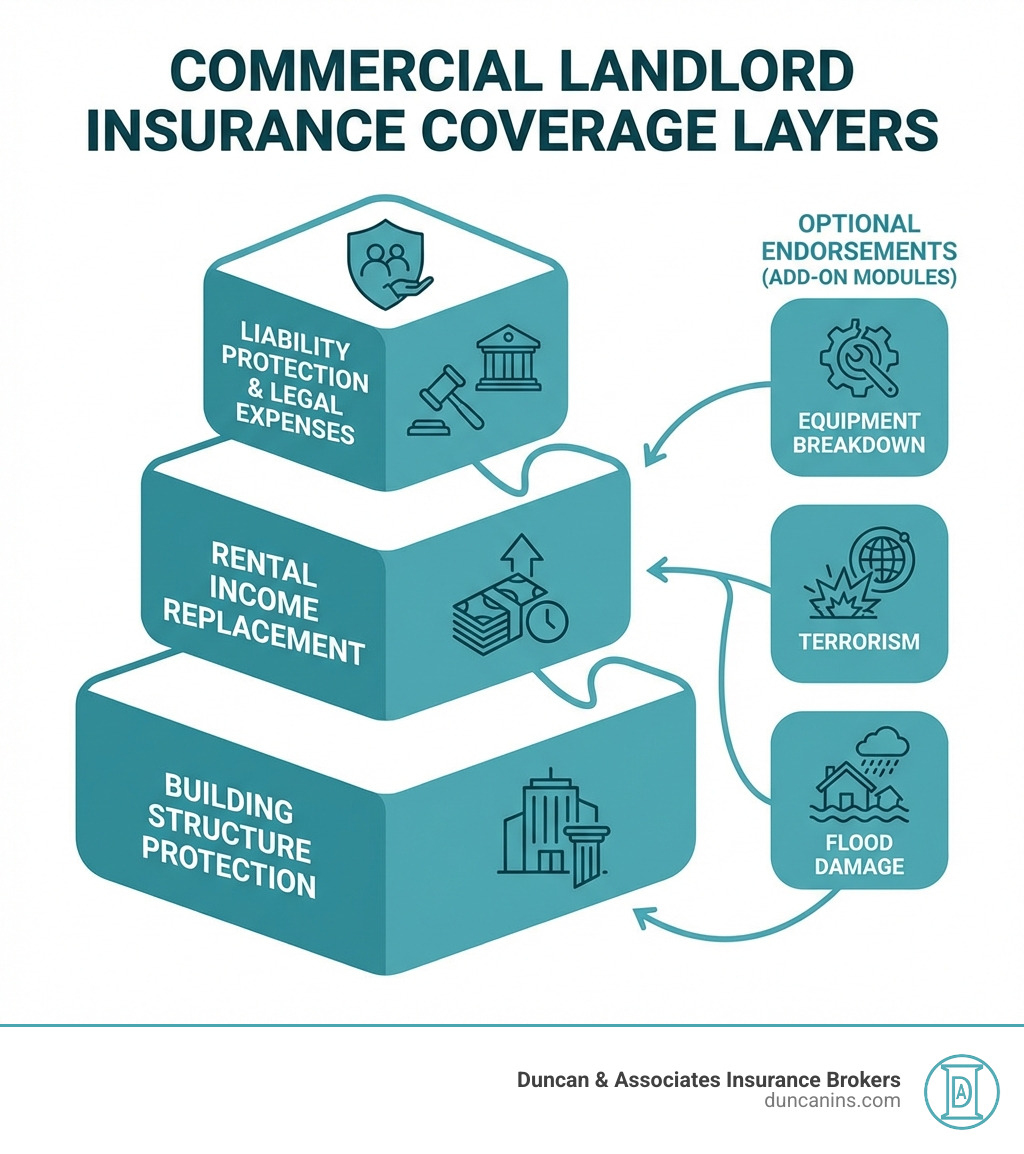
When we talk about core coverages, we are looking at three main pillars:
- Property Damage: This covers the physical structure of your building. If a fire breaks out in a tenant’s kitchen or a severe windstorm rips shingles off your roof, this is the part of the policy that pays for repairs. It typically includes the building itself, plus any of your own equipment or fixtures inside (like HVAC units or lobby furniture).
- General Liability: This is your shield against lawsuits. If someone trips over a loose floor tile in your hallway and sues for medical bills, your liability coverage handles the legal fees and any court-awarded payments. In the commercial world, we often suggest limits as high as $10 million depending on the property size.
- Rental Income Loss: If a fire makes your building uninhabitable, your tenants stop paying rent. However, your mortgage and tax bills don’t stop. Rental income protection (often part of business interruption insurance) replaces that lost cash flow so you can stay afloat while the property is being rebuilt.
For more details on how these apply to your specific building, check out our Commercial Property Insurance page or read our More info about commercial rental property guide.
Defining the Scope of Commercial Protection
Not all commercial properties are created equal. A commercial landlord insurance broker must categorize your property correctly because insurers view a “warehouse” very differently than a “dental office.”
- Retail Spaces: These face high foot traffic, which means higher liability risks. Think slip-and-falls or glass breakage.
- Office Buildings: Generally considered lower risk, but they often have high-value electronics and complex HVAC systems that need protection.
- Industrial Warehouses: These might house heavy machinery or hazardous materials. The fire risk is higher, and the structural requirements for insurance are stricter.
- Manufacturing Facilities: These are the “heavy hitters” of risk. If a machine explodes and damages your building, you need a policy that understands industrial-grade repairs.
Essential Policy Endorsements
Standard policies are a great start, but they often leave “holes.” We recommend adding endorsements—think of them as upgrades—to round out your protection.
- Equipment Breakdown: If your building’s elevator or central boiler suddenly dies, standard property insurance usually won’t cover it (since it wasn’t a fire or storm). This endorsement covers the repair or replacement of these vital systems.
- Terrorism Coverage: Often required by mortgage lenders, this covers damage resulting from certified acts of terrorism.
- Legal Expenses: This helps cover costs for tenant disputes, evictions, or tax protection.
- Pollution Cleanup: Especially important for industrial landlords, this covers the cost of cleaning up accidental spills that damage the property.
You can find a broader Commercial insurance overview to see how these pieces fit together.
Why You Need a Commercial Landlord Insurance Broker
You could go directly to a single insurance company, but that’s like going to a car dealership that only sells one brand. You might get a good car, but you’ll never know if the guy across the street had a better one for half the price.
A commercial landlord insurance broker acts as your personal shopper. We don’t work for the insurance companies; we work for you. We use our market access to “shop around,” which is the best way to ensure you aren’t paying a “loyalty tax” to a carrier that has slowly raised your rates over the years.
How a Commercial Landlord Insurance Broker Simplifies Policy Selection
Let’s be honest: insurance policies are full of jargon. Words like “perils,” “indemnity,” and “subrogation” can make your head spin. A broker acts as a translator. We sit down with you to perform a risk assessment—identifying things you might have missed, like the fact that your building is in a flood zone or that your lease agreement doesn’t properly require your tenant to carry their own liability insurance.
We help bridge the gap between what you think you have and what is actually in the fine print. For a deeper dive, see our Complete guide to commercial rental insurance. You can also Learn more about landlord insurance brokers and how we handle the heavy lifting.
The Benefits of an Independent Commercial Landlord Insurance Broker
As an independent agency, Duncan & Associates has access to a wide panel of carriers. This independence offers several key benefits:
- Choice: We can compare quotes from 50+ providers simultaneously.
- Competitive Premiums: Because we can force carriers to compete for your business, we often find lower rates—sometimes saving clients up to 35% on their premiums.
- Expert Advocacy: If you have a claim, we are the ones who pick up the phone and fight for you. We know the adjusters and we know the rules.
- Personalized Service: You aren’t just a policy number in a call center. You have a dedicated agent who knows your property and your business goals.
Factors Influencing Premiums and Risk Mitigation
Why does your neighbor pay less for insurance than you do? It usually comes down to a few specific factors that insurers use to calculate your “math-chowder” premium.
- Replacement Cost: Insurance isn’t based on what you paid for the building or what you could sell it for today. It’s based on what it would cost to rebuild it from scratch using modern materials and labor.
- Building Age and Construction: An old brick building with 40-year-old wiring is a much higher fire risk than a modern steel-and-glass office.
- Security and Safety Systems: Having a central-station fire alarm, a modern sprinkler system, and security cameras can lead to significant discounts.
- Proximity to Fire Hydrants: If the fire department can’t get water to your building quickly, your rates will reflect that.
Impact of Tenant Type and Lease Agreements
Your tenants are the biggest variable in your risk profile. A “Triple Net Lease” (NNN) often shifts some insurance burdens to the tenant, but you still need your own protection.
- High-Risk Tenants: Restaurants (grease fires), manufacturing (hazardous chemicals), and cannabis-related businesses (specialized risk) will always drive up premiums.
- Low-Risk Tenants: Professional services like accountants or architects are the “gold standard” for low insurance rates.
- Tenant Legal Liability: We always recommend requiring tenants to carry their own insurance. If a tenant’s employee leaves a faucet running and floods three floors, you want their insurance to pay, not yours. Learn more about tenant damage coverage here.
Strategies to Lower Insurance Costs
You aren’t powerless when it comes to your premiums. You can actively lower your costs by:
- Increasing Your Deductible: If you can afford to pay $5,000 out of pocket instead of $1,000 for a small claim, your annual premium will drop significantly.
- Regular Maintenance: Keep records of roof repairs, HVAC servicing, and electrical upgrades. Insurers love a “boring” building that is well-maintained.
- Risk Management: Winterizing pipes to prevent bursts and keeping walkways clear of ice can prevent the most common commercial claims.
Check out More info about business insurance for more tips on managing your bottom line.
Navigating Exclusions and Special Property Scenarios
It is just as important to know what is not covered as what is. Most standard commercial property policies exclude:
- Floods and Earthquakes: These almost always require a separate policy or a specific endorsement.
- Intentional Acts: If you or an employee intentionally damage the property, don’t expect a check.
- Wear and Tear: Insurance is for sudden accidents, not for a roof that simply reached the end of its 30-year life.
For a full breakdown of what to watch out for, our Guide to property management insurance is an excellent resource.
Managing Unoccupied Commercial Properties
A vacant building is a vulnerable building. When a tenant leaves, your risk of vandalism, theft, and arson skyrockets. Most insurers have a “vacancy clause” that reduces or cancels coverage if a building is empty for more than 30 or 60 days.
If your property becomes unoccupied, you must notify your commercial landlord insurance broker immediately. We can help you transition to a specialized vacant property policy that keeps you protected until a new tenant is signed. For more on this, read our Vacant Property Insurance Guide 2025.
The Commercial Claims Process
When disaster strikes, the process can feel overwhelming. Here is the smart way to handle a claim:
- Safety First: Ensure everyone is safe and prevent further damage (like boarding up a broken window).
- Document Everything: Take photos and videos before you clean up anything.
- Call Your Broker: We will help you file the first report of loss and guide you through the loss adjuster’s visit.
- Track Expenses: Keep receipts for any “extra expenses” incurred while trying to get your business back up and running.
Learn more about rental property insurance claims to be prepared before something happens.
Frequently Asked Questions about Commercial Landlord Insurance
How does commercial landlord insurance differ from residential policies?
Commercial buildings use different construction materials (steel/concrete vs. wood frame) and face much more complex liability risks. While a residential tenant might burn a steak, a commercial tenant might operate a high-pressure boiler or store flammable chemicals. Repair timelines for commercial buildings are also much longer, requiring more robust rental income protection.
Is commercial landlord insurance a legal requirement?
While not typically a government mandate like auto insurance, it is almost always a requirement from your mortgage lender. Furthermore, your lease agreements and city ordinances may require certain levels of liability protection to operate a business premise. Even if it weren’t required, going without it is essentially gambling with your entire net worth.
Who is responsible for paying the insurance premiums?
Typically, the landlord pays the premium directly to the insurer. However, in many commercial leases (especially Triple Net or NNN leases), the cost of that insurance is passed back to the tenant as part of the operating expenses or service charges. Always check your specific lease structure to see how these costs are allocated.
Conclusion
Insuring a commercial rental property doesn’t have to be a headache. By partnering with an independent commercial landlord insurance broker like Duncan & Associates, you gain an advocate who understands the nuances of the Washington market and beyond. We pride ourselves on being a client-first agency that makes insurance 100% hassle-free.
Whether you own a single retail storefront or a sprawling industrial portfolio, we provide the choice and expertise you need to protect your “rent checks” and your peace of mind.
Ready to see how much you could save while improving your protection? Get a customized commercial rental insurance quote from our team today. Let us do the shopping so you can get back to growing your business.
