
Understanding the Real Cost of Painting Contractor Insurance
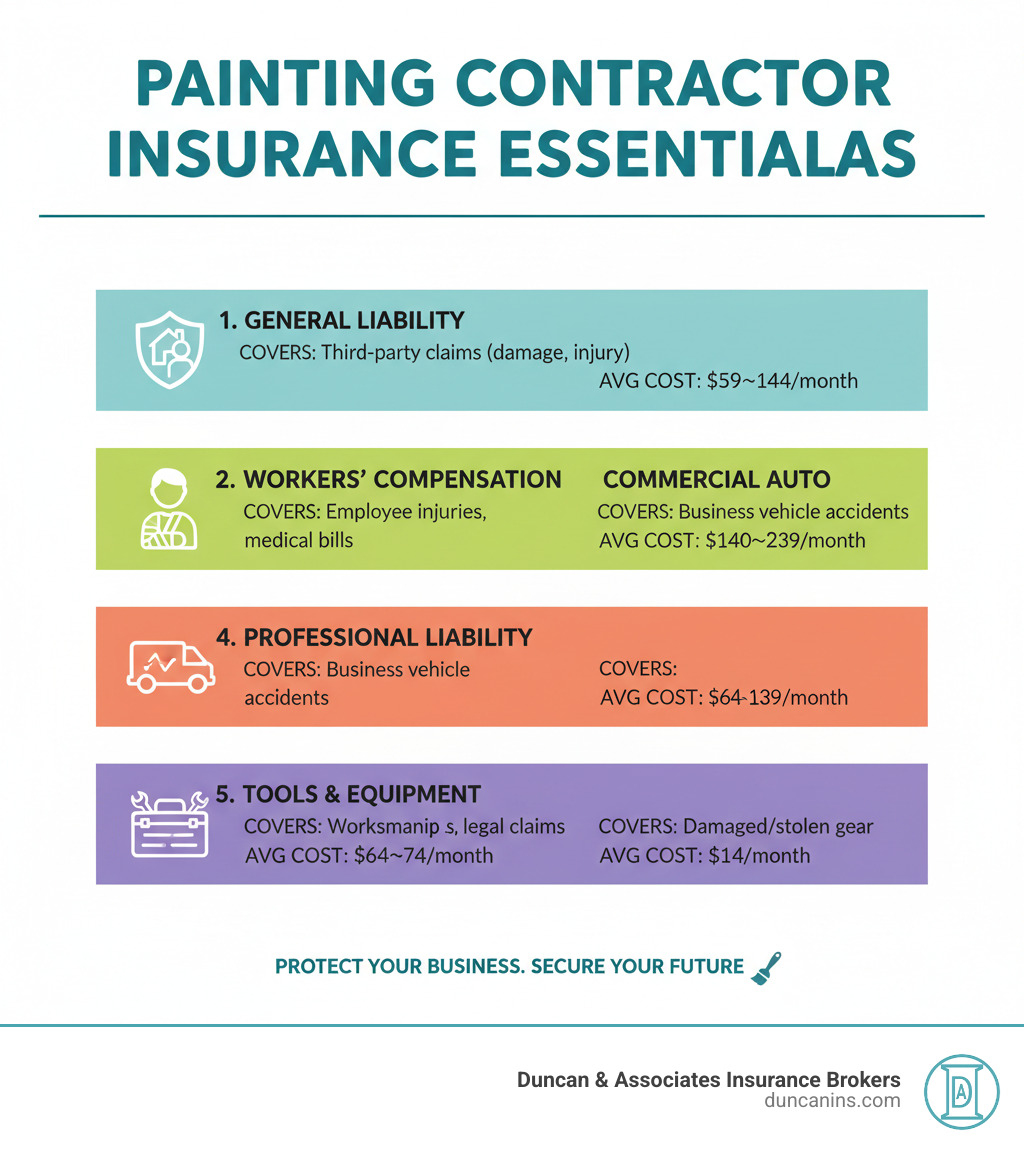
Painting contractor insurance cost typically ranges from $64 to $211 monthly, depending on your coverage and business needs. Here’s a typical breakdown:
- General Liability: $59-$144/month
- Workers’ Compensation: $140-$239/month
- Business Owner’s Policy (BOP): $84-$211/month
- Commercial Auto: $139/month
- Tools & Equipment: $14/month
- Professional Liability (E&O): $64-$74/month
Without the right coverage, an $8,000 stained antique rug or a $15,000 medical bill from a client’s slip-and-fall becomes your financial burden.
Your insurance costs depend on key factors like location, business size, services offered, claims history, and coverage limits. For example, painters in California often pay much more than those in Pennsylvania due to different state regulations and risk factors.
The good news is that there are proven strategies to lower your premiums while maintaining solid protection. I’m Heidi Duncan, and my team helps painting contractors steer the complexities of painting contractor insurance cost to find coverage that protects their livelihood without breaking the bank. We work with multiple insurers to find the right fit for your unique business.
Why Painters Need Insurance (And What It Covers)
Accidents like a paint spill on an antique rug or a client tripping over a drop cloth are everyday realities for painters. This makes managing painting contractor insurance cost one of the smartest investments for your business. Without adequate coverage, a single incident could lead to a $15,000 medical bill or an $8,000 property damage claim, potentially wiping out your profits.
Insurance does more than protect your bank account. Many clients, especially commercial ones, won’t consider your bid without proof of coverage. Likewise, most state licensing boards require specific insurance policies to obtain or maintain a contractor license. Insurance is your gateway to legitimate business opportunities.
It also acts as a legal shield, covering defense costs, settlements, and judgments from lawsuits so you can focus on your work. Our guide on Real-Life Claims Show Why You Need Contractors Insurance shows how these situations unfold. Common claims include:
- Bodily injury: A client trips over equipment or has an allergic reaction to fumes.
- Property damage: Paint spills on flooring, or a ladder scratches siding.
- Professional mistakes: Using the wrong paint for a surface or failing to meet project specifications.
The Main Types of Insurance for Painters
Understanding your options is key. Think of each policy as protecting a different part of your business. Our guide to Steer Contractors Insurance Coverage Types with Ease breaks these down in detail.
General Liability Insurance is your foundational coverage for third-party claims of bodily injury, property damage, or personal injury (like slander).

Workers’ Compensation Insurance is required in most states for businesses with employees. It covers medical expenses and lost wages for work-related injuries.
Commercial Auto Insurance protects vehicles used for business purposes, as personal auto policies won’t cover work-related accidents.
Professional Liability Insurance (E&O) covers claims of faulty workmanship or professional mistakes that cause financial loss to a client.
Tools & Equipment Insurance is an inland marine policy that safeguards your gear from theft or damage on-site, in transit, or in storage.
Business Owner’s Policy (BOP) bundles general liability and commercial property insurance, often at a lower cost than buying them separately. It’s a great value for smaller painting businesses.
Breaking Down the Painting Contractor Insurance Cost
When budgeting, understanding painting contractor insurance cost is crucial. There’s no single price, but most painters pay between $64 to $211 monthly. This range reflects different policy types and risk factors. Some insurers quote median costs (filtering out extremes), while others use averages (which can be skewed by high-risk contractors). We’ve gathered data to give you a realistic picture.
Policy limits and deductibles greatly affect your costs. Most general liability policies have $1 million per occurrence and $2 million aggregate limits. Doubling your aggregate limit to $2 million might only add $15-$20 monthly. A higher deductible ($1,000 or $2,500) can also significantly reduce your premium, but you must be able to pay that amount out-of-pocket for a claim.
| Insurance Type | Average Monthly Cost |
|---|---|
| General Liability Insurance | $59 – $144 |
| Workers’ Compensation Insurance | $140 – $239 |
| Business Owner’s Policy (BOP) | $84 – $211 |
| Commercial Auto Insurance | $139 |
| Contractor’s Tools & Equipment | $14 |
| Professional Liability (E&O) | $64 – $74 |
| Commercial Umbrella Insurance | $59 |
| Surety Bonds | $8 |
How Much Does General Liability Insurance Cost for Painters?
General liability insurance is the core of your coverage, typically costing $59 to $144 monthly. This wide range is due to factors like location, business size, and claims history. Location is a major driver; for example, annual premiums in Florida might be $265 to $808, while California sees $299 to $1,084.

This policy is essential for covering third-party property damage, like a paint spill on a hardwood floor, and bodily injury claims if a client trips over your equipment. Many clients and licensing boards require it before you can bid on jobs. For more details, see our General Liability Insurance guide.
Workers’ Compensation and Commercial Auto Insurance Costs
Two other key parts of your painting contractor insurance cost are Workers’ Comp and Commercial Auto.
Workers’ Compensation is legally required in most states if you have employees, averaging $140 to $239 monthly. Costs depend on payroll, job classifications, claims history, and state rules. It covers medical treatments and lost wages for injured employees, protecting them and shielding your business from lawsuits.
Commercial Auto Insurance is essential for any vehicle used for work, averaging $139 monthly. A personal auto policy won’t cover business use, creating a major financial risk. This policy provides liability protection for accidents while transporting supplies or equipment. Hired and Non-Owned Auto (HNOA) coverage is a crucial add-on if employees use personal vehicles for work.
To learn more about these coverages, explore our guide on Workers Comp or Contractors Insurance: What’s Best for You?.
BOP, E&O, and Equipment Coverage Costs
Three additional policies complete your insurance portfolio.
Business Owner’s Policies (BOPs) are a great value for small to mid-sized painters, costing $84 to $211 monthly. They bundle general liability, commercial property, and often business interruption coverage at a lower rate than separate policies. A BOP is ideal if you own or lease a workshop or office. Learn more at our Business Owners Insurance page.
Professional Liability (E&O) Insurance costs $64 to $74 monthly and protects against claims of faulty workmanship or professional mistakes that cause financial loss, which aren’t covered by general liability.
Tools & Equipment Insurance is a bargain at just $14 monthly. This inland marine coverage protects your valuable sprayers, ladders, and other gear from theft or damage anywhere they are—on-site, in transit, or in storage.
Key Factors That Influence Your Insurance Premiums
Your painting contractor insurance cost is calculated based on several factors that reflect your business’s unique risk profile.
Location: State regulations, local laws, and regional risks have a major impact. General liability for contractors in California averages $144 per month, while painters in Pennsylvania pay around $57 per month for similar coverage.
Team Size: Your number of employees and total payroll are key factors for Workers’ Compensation premiums, which are typically calculated as a rate per $100 of payroll.
Services Offered: Your risk profile is shaped by the work you do. Exterior work at heights, commercial projects, and handling hazardous materials are considered higher risk than interior residential jobs.
Claims History: A clean record signals you are a low-risk client. A single claim can raise your rates by 10-30% at renewal for three to five years.
Years in Business: New businesses often pay more until they establish a track record of safe operations. Longevity can lead to lower premiums.
Coverage Limits & Deductibles: Higher limits increase premiums but offer more protection. Higher deductibles lower your monthly cost but increase your out-of-pocket expense per claim.
Equipment and Vehicles: The value of your tools and commercial vehicles directly influences your Tools & Equipment and Commercial Auto policy costs.
Subcontractors: Insurers will want to see that any subcontractors you hire carry their own insurance. If not, your policy may need to cover their risk, increasing your premium.
By understanding how these factors work, you can make informed decisions to optimize your insurance costs. For a deeper dive, check out our Comprehensive Look at Contractors Insurance Cost Elements.
Smart Strategies to Lower Your Painting Contractor Insurance Cost
You can actively manage your painting contractor insurance cost with several smart strategies to keep premiums reasonable without sacrificing protection.

Bundle Policies: A Business Owner’s Policy (BOP) combines general liability, commercial property, and other coverages. Insurers often provide a 10% to 25% discount for bundling.
Increase Your Deductibles: Raising your deductible from $500 to $2,500 can reduce premiums by 10-15%. Ensure you have the cash flow to cover the higher out-of-pocket cost if a claim occurs.
Implement a Safety Program: Documented safety protocols, regular crew training, and a focus on accident prevention can earn you discounts of up to 15%. Fewer claims also lead to lower long-term rates.
Pay Annually: Paying your premium in one annual lump sum can save you 5-10% by avoiding monthly administrative fees.
Shop Around for Quotes: As an independent broker, Duncan & Associates compares rates from multiple insurers to find the best combination of coverage and price for you. Rates can vary significantly between carriers for identical coverage.
Conduct Annual Policy Reviews: Review your policy each year to ensure your coverage matches your current operations. Changes like reducing payroll or stopping high-risk work should lower your premiums.
Maintain a Clean Claims Record: Good safety practices are the best way to prevent claims and keep your rates low.
Obtain Specialized Certifications: Certifications from organizations like the NACE International Institute can demonstrate expertise and may lead to lower rates from some insurers.
These strategies work best when used together. For more detailed guidance, check out our guide on Effective Tips for Cutting Contractors Insurance Costs Today.
Navigating State Requirements and Getting Your Policy
Staying compliant with local laws is crucial for managing your painting contractor insurance cost. Each state, and sometimes city or county, has its own rules for contractors.
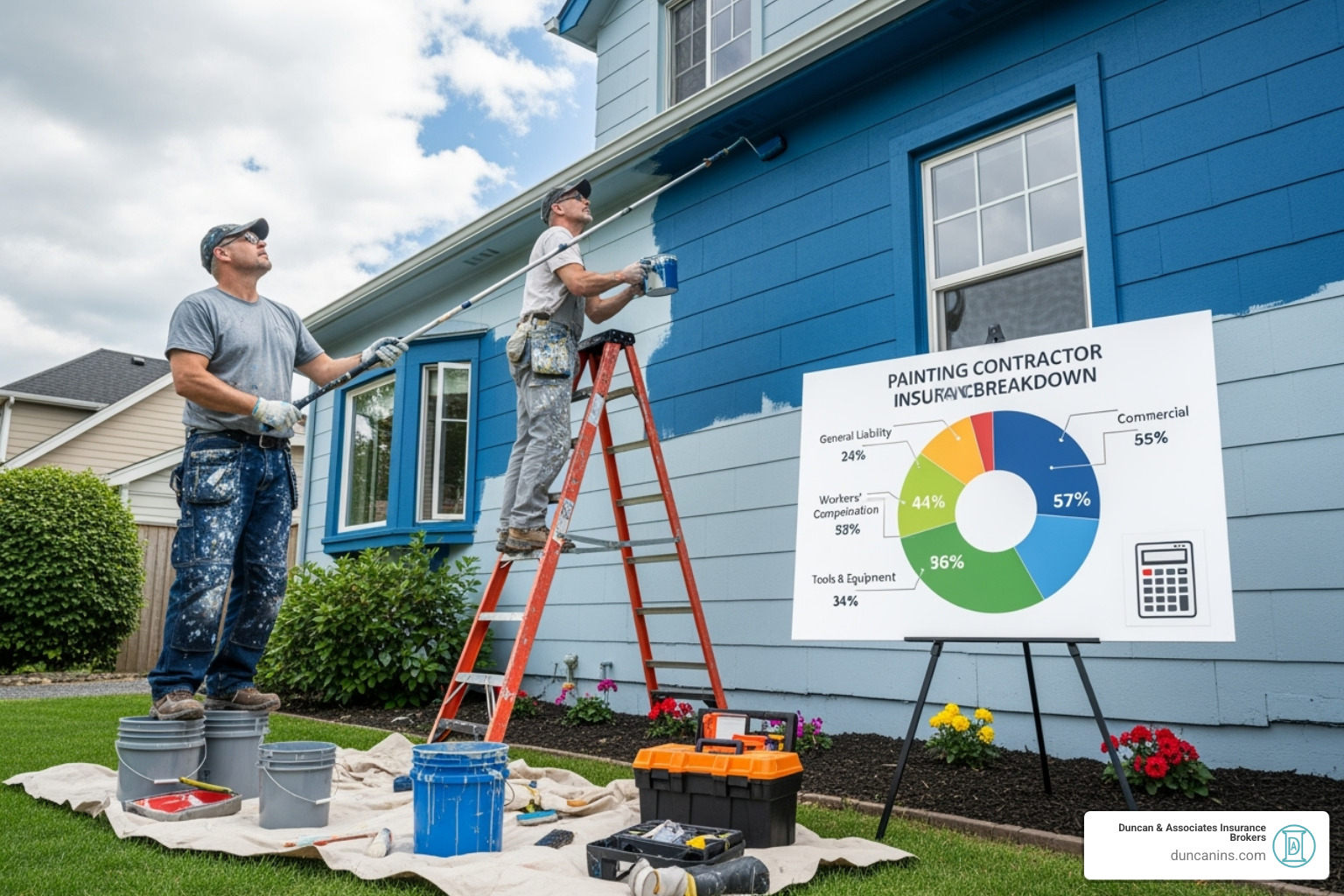
Many state licensing boards set minimum insurance requirements. For example, California requires a surety bond and workers’ comp, while Florida mandates liability and workers’ comp. Other states like Idaho and Utah specify minimum general liability coverage limits.
Some states also require surety bonds, which are not insurance but rather a guarantee for your clients. If you fail to complete a job, the bond reimburses the client, and you then repay the surety company. They are affordable, often around $8 per month or $100 annually, and help you meet licensing requirements.
Getting Your Policy and Proving Coverage
The process of getting coverage is straightforward, and proving you have it is easier than ever.
Certificate of Insurance (COI): This document is your proof of insurance, required by most clients and general contractors. You can typically generate and send COIs instantly from your insurer’s online portal or app, giving you a competitive edge.
Getting a Quote: To get an accurate quote, you’ll need basic information: business name and structure, years in business, services offered (residential/commercial, interior/exterior), estimated annual revenue and payroll, and vehicle/equipment details. Your claims history (“loss runs”) will also be reviewed.
Comparing Quotes: Working with an independent agency like Duncan & Associates allows you to compare quotes from multiple carriers to find the best value, not just the lowest price. We help you understand the policy details, limits, and exclusions.
Year-End Audits: Be aware that premiums for liability and workers’ comp are often based on estimates. Your insurer will conduct a year-end audit to verify your actual revenue and payroll. If your business grew, you might owe additional premium; if it was slower, you could get a refund. Accurate record-keeping prevents surprises.
For comprehensive guidance on navigating these state-specific requirements, check out our detailed resource on Understanding State Requirements for Contractors Insurance.
Conclusion
Protecting your painting business is an affordable and essential investment. As we’ve covered, painting contractor insurance cost typically ranges from $64 to $211 monthly. While factors like your location, services, and claims history determine your exact premium, you have control. By bundling policies, implementing safety programs, and shopping for the best rates, you can manage costs effectively.
Cookie-cutter policies don’t work for contractors. Your business has unique risks, and you need custom coverage that provides the right protection without overpaying. This is where Duncan & Associates Insurance Brokers can help. We make insurance easy and hassle-free for contractors. By working with multiple top-rated carriers, we shop on your behalf to find the perfect balance of coverage and cost—no confusing jargon, just straightforward guidance.
Don’t let one accident put your hard work at risk. The peace of mind from proper insurance lets you focus on growing your business.
Ready to protect your painting business with confidence? Get a custom quote for your Contractor Insurance today and find how affordable comprehensive protection can be.
