
Why Custom Truck Appraised Value Insurance Diesel Conversion Coverage Matters
Custom truck appraised value insurance diesel conversion coverage is critical for protecting the significant investment you’ve made in your vehicle. Without it, you risk a major financial loss.
Quick Answer: How to Properly Insure Your Diesel Conversion
- Get a professional appraisal from a certified appraiser experienced with custom vehicles.
- Document everything—save all receipts, invoices, and photos from your build.
- Seek specialized insurance with an Agreed Value policy, not standard Actual Cash Value (ACV) coverage.
- Report all modifications to your insurer to avoid claim denial.
- Understand premiums will likely increase based on horsepower and conversion quality.
You’ve poured thousands of dollars and countless hours into your custom diesel conversion. The problem is, your standard auto insurance policy likely won’t cover what your truck is actually worth.
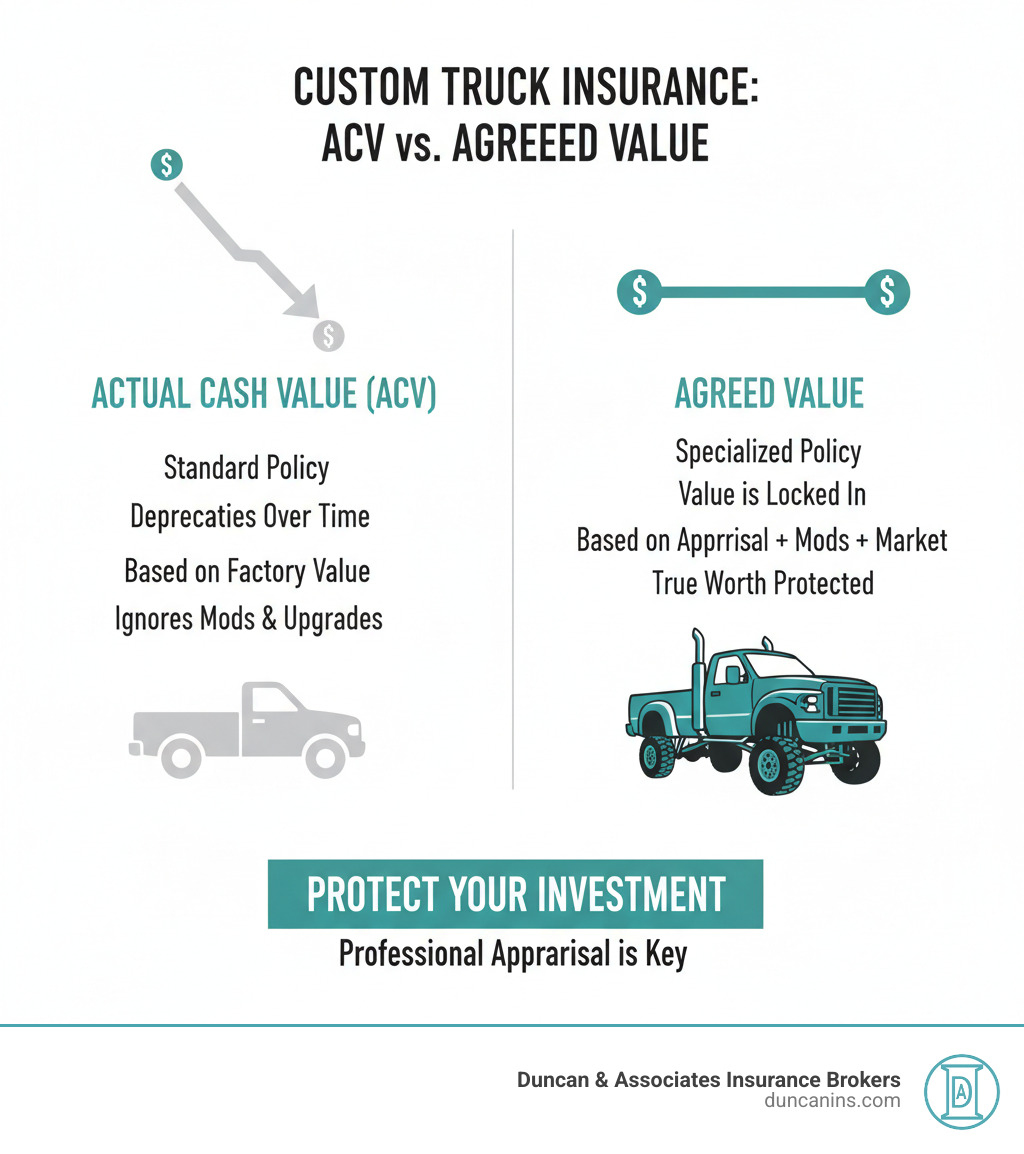
Most insurers use Actual Cash Value (ACV), which determines payouts based on a generic book value and depreciation. This method completely ignores your $15,000 diesel swap, custom fabrication, and performance parts. If your truck is totaled, you could receive a fraction of what you’ve invested.
This guide explains how to protect your custom diesel truck, from understanding the appraisal process to finding specialized coverage that reflects its true value.
As Heidi Duncan, owner of Duncan & Associates Insurance Brokers, I’ve helped countless truck owners steer custom truck appraised value insurance diesel conversion challenges. My team understands that your custom build is a significant investment that requires proper protection.
Basic custom truck appraised value insurance diesel conversion vocab:
Defining “Custom”: What Insurers See When They Look at Your Truck
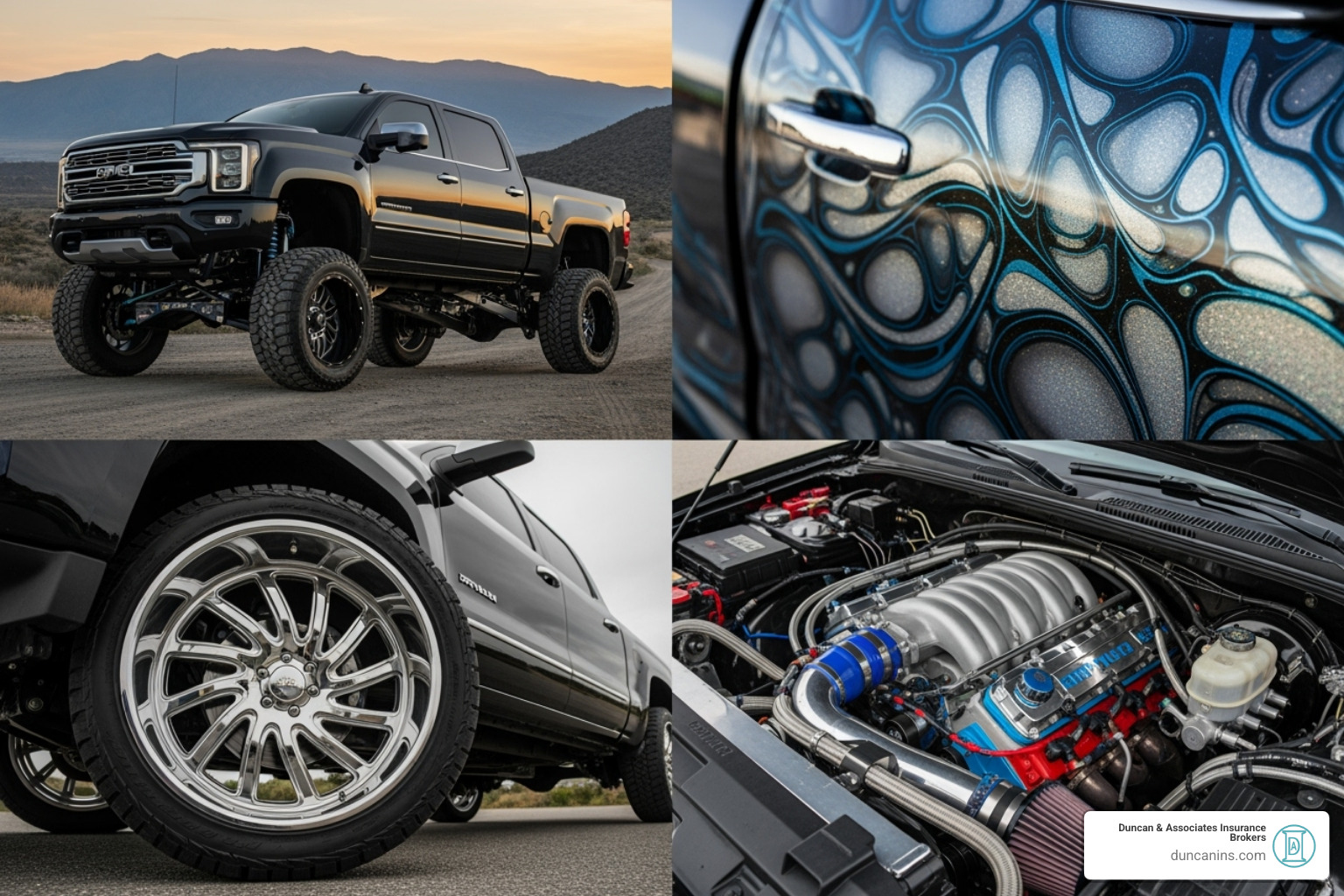
When seeking custom truck appraised value insurance diesel conversion coverage, it’s important to know that “custom” has a specific meaning for insurers. A custom vehicle has been significantly altered from factory specifications in ways that affect its value, performance, or risk profile.

Key modification categories include:
Performance modifications: These upgrades make your truck faster or more powerful. Examples include engine tuning, turbochargers, upgraded brakes, and performance exhaust systems. Trucks modified to 650 or more horsepower typically require specialized coverage and a minimum vehicle value of $15,000. Nitrous components usually disqualify a vehicle from standard custom policies. You can explore more about performance modifications and their impact.
Aesthetic modifications: These change your truck’s appearance. Custom paint jobs costing $10,000 or more are a major flag for insurers. Body kits, unique grilles, and custom rims also fall into this category. For instance, trucks with custom rims 22 inches or larger often need a minimum value of $15,000 for proper coverage.
Structural alterations: These are the most fundamental changes, affecting the chassis, frame, or body. Suspension lifts, frame-off restorations, and hydraulic systems are all considered significant structural alterations that fundamentally change the vehicle’s risk profile.
If your truck has been substantially changed from its original factory state, insurers will classify it as custom. This classification is crucial because standard policies are designed for factory-spec vehicles. Once your truck is considered “custom,” you need specialized coverage that recognizes its true value. For a deeper dive, see our guide on Insurance for Custom Trucks.
The Heart of the Matter: How a Diesel Conversion Impacts Value and Premiums
Diesel conversions are popular for their low-end torque, fuel efficiency, and longevity. From an insurance perspective, however, a diesel swap’s impact on value and premiums is complex.
Impact on Appraised Value:
A professional appraiser evaluates several factors to determine your truck’s value post-conversion:
- Quality of the Conversion: A professional installation by a specialized shop with proper system integration can substantially increase value. A poorly executed DIY job can actually decrease it, regardless of the cost of parts.
- Engine Choice: Legendary engines like a Cummins 12-valve or a Duramax add significant value due to their reputation for reliability and performance. Less common engines may not be valued as highly.
- Overall Vehicle Condition: A flawless diesel swap in a truck with a pristine body and clean interior is worth far more than the same conversion in a high-mileage truck with rust and a worn-out chassis.
Insurance Perspective: Increased Risk and Premiums:
Your premiums will likely increase after a diesel conversion due to assessed risk:
- Horsepower Increase: More power translates to greater accident risk in the eyes of an insurer. Exceeding the 650-horsepower threshold often requires specialized insurance.
- Repair Complexity: A converted truck requires specialized knowledge and parts for repairs, increasing potential claim costs.
- Higher Replacement Cost: If the conversion successfully increases your truck’s value, the insurer’s potential payout in a total loss is higher, leading to higher premiums.
Emissions Compliance:
Many states have strict emissions regulations. An engine swap can easily violate these rules, making the truck difficult to register, sell, or insure. Some insurers will not cover a vehicle that isn’t street-legal. Research your state’s laws before starting a conversion.
Favorable Conversions:
Insurers are most likely to accept conversions that are:
- Professionally built and well-documented with receipts and photos.
- Equipped with reliable engine choices like Cummins, Power Stroke, or Duramax.
- Properly integrated, emissions-compliant, and safe to operate.
If your conversion is for a work truck, understanding the specific requirements for commercial vehicles is even more critical. Our Business Auto Insurance services can provide guidance.
The Appraisal Process for Your Custom Truck Appraised Value Insurance Diesel Conversion
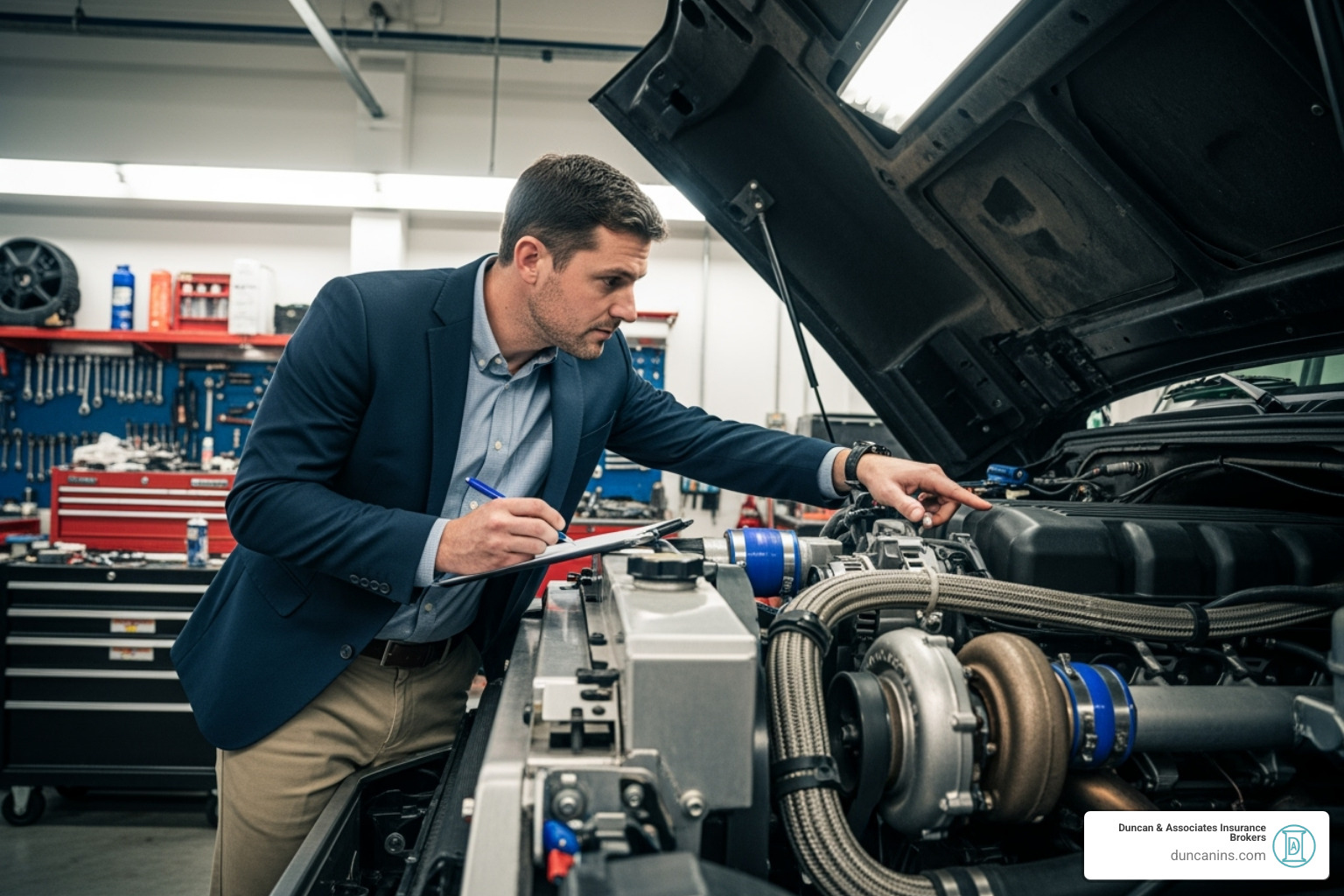
Getting your custom truck appraised value insurance diesel conversion correctly valued is the most critical step to being properly insured. This requires a professional assessment, as standard valuation tools are inadequate.
Why Standard Book Values Fail:
Resources like NADA or Edmunds are designed for mass-produced vehicles and cannot account for custom components, labor, or quality of work. Relying on them for a custom truck will result in a valuation far below its true worth.
Finding a Certified Appraiser:
To get an accurate valuation, you need a certified appraiser with experience in custom and modified vehicles. They should understand aftermarket parts, performance upgrades, and quality installation. Appraisers who also handle heavy equipment appraisals often have relevant experience with heavy-duty modifications.
Key Appraisal Factors:
A qualified appraiser conducts a comprehensive assessment, looking at:
- Condition: The appraiser will scrutinize the exterior, interior, and mechanical components. A well-maintained vehicle with documented history retains significant value.
- Mileage: For trucks, high mileage is less of a concern if it’s backed by diligent maintenance records.
- Quality of Parts: Using top-tier components from respected brands directly increases your truck’s value.
- Craftsmanship: A clean, professional installation that looks factory-quality commands a premium. Poor workmanship can lower the truck’s value.
- Rarity and Uniqueness: Unique components or exceptional performance can contribute to a higher appraised value.
- Base Vehicle Value: The underlying truck provides a foundation. Popular models like the Ford F-150, Ram 1500, or Toyota Tacoma tend to retain value well.
For more details, see these key factors to know for an accurate truck appraisal. At Duncan & Associates, we find coverage reflecting this unique value. Learn more about our Custom Truck Appraised Value Insurance.
The Crucial Role of Documentation
For insurers and appraisers, if it’s not documented, it didn’t happen. Your documentation is proof of your investment and quality of work.
Create a “build book” containing every receipt, labor invoice, and a log of your own time if you did the work yourself. This paper trail is your evidence. Photographic evidence is also vital. Take photos before, during, and after the build to provide undeniable proof of the work performed. Finally, keep detailed maintenance records to show the truck has been well cared for, which directly impacts its reliability and value.
Essential documents for your appraisal:
- Original vehicle title and registration
- Detailed list of all modifications, including brands and models
- Receipts for all parts and materials
- Invoices from professional installers detailing labor costs
- Photo documentation of the build process
- Complete maintenance and service logs
Ensuring a Fair Appraisal for Your Custom Truck Appraised Value Insurance Diesel Conversion
To ensure you receive a fair valuation for your custom truck appraised value insurance diesel conversion, take an active role in the appraisal process.
First, prepare the truck by giving it a thorough cleaning and detailing. A well-presented vehicle signals pride of ownership and can lead to a more favorable assessment. Whenever possible, be present for the appraisal to act as your truck’s advocate. Walk the appraiser through the build, highlight quality parts and craftsmanship, and answer their questions.
If you receive a low valuation, you have the right to dispute it. Most policies contain an “appraisal clause” allowing you to hire your own independent appraiser to challenge the insurer’s figure. As confirmed by industry resources, an insured can dispute a carrier’s appraisal. A good appraiser will also consider the current market value by looking at sales of similar custom vehicles, which you can learn more about by assessing truck market value.
Finding the Right Policy: Agreed Value vs. Actual Cash Value
The type of policy you choose for your custom truck appraised value insurance diesel conversion is the difference between fair compensation and a major financial loss.
Standard Policies: The ACV Problem
Most standard auto policies use Actual Cash Value (ACV). If your truck is totaled, the insurer pays its replacement cost minus depreciation. This method ignores your custom work. For example, after a total loss, an insurer might offer you $15,000 for your truck based on its stock value, completely ignoring the $30,000 you invested in a diesel swap and other upgrades. This is the total loss nightmare you must avoid.
Specialized Insurance: Protecting What You’ve Built
Specialized insurance offers better alternatives: Agreed Value and Stated Value policies.
An Agreed Value policy is the gold standard. Before coverage begins, you and the insurer agree on a specific value for your truck based on a professional appraisal. If the truck is totaled in an accident, theft, or even from natural disasters, the insurer pays that full, pre-agreed amount with no depreciation.
A Stated Value policy is less secure. You state what you believe the truck is worth, but in a claim, the insurer pays the lesser of your stated value or the ACV. You could still end up with a payout that doesn’t cover your investment.
Here’s how they compare:
| Feature | Actual Cash Value (ACV) | Stated Value | Agreed Value |
|---|---|---|---|
| Valuation Method | Replacement cost minus depreciation | Stated amount OR ACV, whichever is less | Fixed amount agreed upon at policy start, based on appraisal |
| Custom Mod Coverage | Typically limited or excluded | May cover up to stated amount, but still subject to ACV limit | Full coverage for custom mods up to the agreed amount |
| Total Loss Payout | Market value of a stock vehicle, depreciated | Lesser of stated value or ACV | The full agreed-upon amount |
| Protection for Investment | Poor | Moderate, with potential shortfalls | Excellent—guarantees full compensation |
| Premium Cost | Lower | Moderate | Higher |
| Appraisal Required? | No | Often recommended | Yes, professional appraisal is mandatory |
Why Specialized Coverage Matters
An Agreed Value policy provides certainty. You know exactly what you’ll receive if the worst happens, offering peace of mind that your investment is protected.
The Trade-Offs to Consider
Specialized coverage has higher premiums because the insurer guarantees a specific payout. Some policies also have usage restrictions, such as annual mileage limits or secure storage requirements. Not all carriers offer this coverage, which is why working with an independent broker like Duncan & Associates Insurance Brokers is so valuable. We have relationships with carriers who understand custom vehicles and can find the right policy for you.
For more on coverage types, read our guide on Comprehensive vs. Collision Coverage: What Truckers Need.
How Intended Use Shapes Your Custom Truck Appraised Value Insurance Diesel Conversion
How you use your truck directly impacts your insurance options and costs. Be honest with your insurer about its primary purpose to ensure you’re properly covered.
- Daily Driver: Regular use means higher exposure and typically higher premiums.
- Show/Hobby Truck: Limited use may qualify you for lower premiums, but these policies often come with mileage caps (e.g., 2,500-5,000 miles/year) and require storage in an enclosed garage.
- Work Vehicle: Using your truck for business requires commercial auto insurance, which has different liability requirements and higher premiums. Whether you operate locally or long-haul also affects coverage, a topic we cover in our local vs. long haul considerations guide.
- Collector Item: A rare or classic build may qualify for collector car insurance, which often uses agreed value and recognizes that the vehicle may appreciate. These policies have strict usage and storage rules.
- Off-Road/Racing: Standard policies almost always exclude damage from competitive events or extreme off-roading. You will need specialized event coverage, which can be difficult and expensive to obtain.
Frequently Asked Questions about Custom Diesel Truck Insurance
Here are answers to the most common questions we hear from custom diesel truck owners.
Will a diesel conversion automatically make my truck insurance more expensive?
It’s highly likely, but not automatic. The premium increase depends on factors like the horsepower increase, the quality of the work, and your driving record. A professional conversion on the policy of a driver with a clean record will be viewed more favorably. An independent broker like Duncan & Associates Insurance Brokers can shop multiple carriers to find competitive rates for your custom truck appraised value insurance diesel conversion.
Can I get insurance if I did the diesel conversion myself?
Yes, but it’s more challenging. Insurers are cautious about DIY modifications. To get coverage, you will need:
- Extensive documentation: A build book with receipts for all parts and comprehensive photos of the entire process is essential.
- A professional appraisal: An appraiser’s certification that your work is safe and well-executed is critical for convincing an insurer to take on the risk.
Be prepared for extra scrutiny and potentially higher premiums compared to a professionally installed conversion.
What happens if I don’t tell my insurance company about my diesel conversion?
This is a major risk you should not take. Failing to disclose a significant modification like a diesel conversion is considered material misrepresentation and can have severe consequences:
- Claim Denial: Your insurer can refuse to pay your claim, leaving you responsible for all costs from an accident.
- Policy Cancellation: The insurer can cancel your policy, making it extremely difficult and expensive to find new coverage elsewhere.
- Accusations of Insurance Fraud: In serious cases, this could lead to legal trouble.
Transparency is always the best policy. The peace of mind from having proper coverage is worth more than any potential savings from hiding modifications.
Conclusion: Protect Your Passion and Your Investment
Your custom diesel truck is the result of a significant investment of time, effort, and money. After all that work, you can’t rely on a standard insurance policy that fails to recognize its true value.

Protecting your custom truck appraised value insurance diesel conversion comes down to a few key steps: document your build carefully, get a professional appraisal, choose a specialized Agreed Value insurance policy, and be transparent with your insurer. These actions ensure your unique asset is protected for what it’s actually worth.
Your custom build deserves more than a generic policy. At Duncan & Associates Insurance Brokers, we specialize in navigating the complexities of custom vehicle insurance. We work with carriers who appreciate custom builds and can connect you with a policy that reflects your investment.
Get a quote for your custom trucking insurance needs today and enjoy the peace of mind that comes from knowing your passion is properly protected.
